Middle English Word of the Moment

Showing posts with label identity. Show all posts

Saturday, February 20, 2010

Widows, memory and identity

I was reading a couple of days ago a chapter by Bernard Jussen: “Challenging the Culture of Memoria: Dead Men, Oblivious and the ‘Faithless Widow’ in the Middle Ages”[1].

Now, for a start, that’s an interesting premise: memory not just as an abstract concept but as a culture and set of behaviour that the abandoned wife performs, with the effect that she keeps her dead husband ‘alive’ to the community; that her remarriage ‘forgets’ him, implicitly killing him or consigning him to oblivion.

Jussen examines the story of the Faithless Widow[2] in its various mutations over the years (and it dates back originally to Ancient Rome) to show that the mediaeval versions focus less on the sexual misdemeanour than on the implications of remarriage.  For Jussen, that is where the threat lies, not in the (adulterous?) sex itself. He then extends this to examine the tension between a widow’s duty to the dead (mourning, fidelity, memory) and to the living (feeding and clothing herself and her children, maintaining the dead man’s house and social status), seeing the tension as ideally resolved with a set period of mourning.  The wife ‘dies’ with her husband (and he points to extravagant hopeless behaviour associated with the deserted wife at a funeral, including flinging herself onto the coffin and into the grave) and suffers a period of ‘death’, suiting her habit and social behaviour to this new (temporary) identity, before returning to life and the living (221-22).

Of course, this is very interesting to me, because it raises the question of a very particular kind of temporal identity – that defined by a period in one’s life, rather than within a broader social epoch.  Widowhood is in itself a kind of identity bestowed by temporality and focussed on the past (until and unless it is renounced).  Effectively, your time is over.  Mourning is much more intense, more prescribed, more culturally sensitive and more symbolic – but implies a return to some kind of life, albeit the life of widowhood that is, in itself, an end. 

How did women think about themselves as different during either period? or how were they told they should? Of course, it would always differ from one individual to the next; but can we see women looking forward to the end of mourning, seeing themselves as living within a death with expected resurrection, or was the ‘death’, while experienced, meant to be complete, hopeless? Do we find comparisons to purgatory, to hell, to the three days before the Resurrection? Or (re. either mourning or widowhood) to more ordinary, everyday experiences of religion than the spiritual – Lent, for example, turning the experience to simply a kind of fasting, a time in which behaviour is culturally restricted but identity is not fundamentally altered?

Can we usefully consider widowhood (or mourning) beside other liminal and peripheral social figures / states of being?

- More permanent models of death-in-life are offered by monks and nuns, or (more extremely) anchorites, with the habits (both sartorial and behavioural!) to match. For some (all?) of these, the change in identity may have a start date, but (most likely) not an end date, or not an expected one.  On the other hand, the expected or prescribed temporal shift here might be less to do with entering a new model of identity and more to do with modelling oneself on heavenly time, rather than earthly. In moving towards that kind of time, they place themselves closer to God, and their prayers gain (presumably) more effect with him to beg favour for others.

- What about lepers – with the ceremony of consecration that is so close to a funeral? with their special outsider status, halfway elevated and halfway lowered? This has a definite starting date, and it is not something undertaken willingly.  It also has an implicit end date, in that leprosy is an eventual sentence of death – you are on time that God allows you.  Lepers are also interesting in that that time they spend suffering on earth (earthly time) reduces not just their own time suffering in heavenly time after death in purgatory, but that of other people.  Their sentence to reduced time on earth, their physical bodily status within that time, their adherence to particular socially prescribed behaviour, has the power to affect the spiritual status of others, and their very relationship to God.

- Unchurched new mothers? This was a prescribed time out of society, like mourning – but with taints of uncleanliness, like leprosy, and with the very real threat of death for one or both parties.  Like widowhood, however, it has a stipulated ending, and offers the way to a joyous ‘rebirth’ into society for the mother, who has with her own body brought another Christian soul into the world, if all went well.

Widows are also special in similar ways – particularly during mourning, they are expected to perform certain behaviours that aid their husbands’ passage through purgatory and towards God. At the same time, society expects them to return to their duties to the living, and their husbands’ living house.  In the case of many women, the ability to support their children financially would mean marrying again, potentially endangering their devotions to the dead husbands.

I don’t think I’m aiming for any particular argument here, just tossing ideas around.  But we seem to have arrived at:

- People placed on the periphery of society, in privileged, socially prescribed positions that are analogous to death (and often compared explicitly to it by the behaviour and dress custom accords them) seem to be simultaneously ‘shut away’, hidden from view, and yet to have some kind of special access to the heavenly help line. 

- In drawing closer to heavenly time, how do they gain the ability to affect the spiritual state of others, with a focus on the time allotted others in torment after death?

- How does mediaeval theology distinguish between earthly time and heavenly? how did individuals understand themselves within this pattern?

- To what extent does failure to correctly adhere to the identity prescribed to the individual by their special status diminish or remove the effect of their influence, retarding the process of (eg) the husband’s passage through purgatory?

- Meanwhile, performing proscribed actions seem to be able to cause the husband to retrospectively ‘vanish’ from time altogether.  If the re-marrying wife who violates her mourning hangs her husband up in place of the nameless thief,  remarriage figures as oblivion/death, analogous to an eternal (or very very long) time spent in purgatory.

--------------

[1] In Patrick J. Geary, Gerd Althoff, Johannes Fried (eds). Medieval Concepts of the Past: Ritual, Memory, Historiography. Cambridge: Cambridge UP, 2002.

[2] Newly widowed woman cries and weeps on the grave of her husband, refusing to leave it despite her family’s insistence that she ‘return to life’; passing soldier says the same thing and she has sex with him on her husband’s grave, promising/proposing to marry him; his neglect of his duty has meanwhile caused the hanged corpse he ought to have been guarding to be stolen, so she proposes they dig up her husband and hang him in the other corpse’s place to prevent the soldier being punished.

Tuesday, January 26, 2010

Temporal identity

So I’m returning to this idea again, which I first floated back in September over here, of temporal identity. I’ve still not really seen it explored anywhere, but I do think it’s potentially a valuable methodological approach. 
The idea is to interrogate texts for a sense of identity defined with significant attention to one’s place in time.  This identity may be personal, or attached to membership of a small group (family, parish, social stratum), or on a larger scale approaching national or universal.  It may also involve the deliberate exclusion of other groups (we are more advanced / more traditional than they are), or an attempt to forge a more inclusive future.  It may be unconscious, assumed, or defensive of something that ought to be generally assumed; or it may be deliberately constructive of a particular historical moment.
For example, we know that (broadly speaking) some Renaissance texts could be found to define themselves deliberately against an immediate mediaeval past, particularly certain aspects of it that they found repellent or obstructive, and simultaneously assume to themselves similarities with a more distant classical past, in an attempt to construct (in collaboration with other people now) a more idealised future. 
Millenarians (which I know nothing about) could also be an interesting case in point, as investing (or professing to invest) an exceptional degree of identity in one clearly defined future point, beyond which there would be no future (or would there? how does divine/infernal eternity relate to this?).  But to what extent do they (individually - I doubt they were ever really a body as such) acknowledge a debt to the Biblical and classical traditions on which they were drawing, or relate the coming final moment to the sinful actions of the distant past, immediate past or present?  How did they understand the effects of one moment in time, or one age, on another, on themselves, on the world around them, on the moments to come?
Other potentially interesting fields of investigation:
- On a smaller scale, and prompted just now by thoughts of millenarians’ focus on a specific immediate future point: what about individual testimony within individual lives? such as a pregnant woman awaiting childbirth, if such a testimony exists? Could we extend this sort of investigation to such an intimate, complicated test subject?
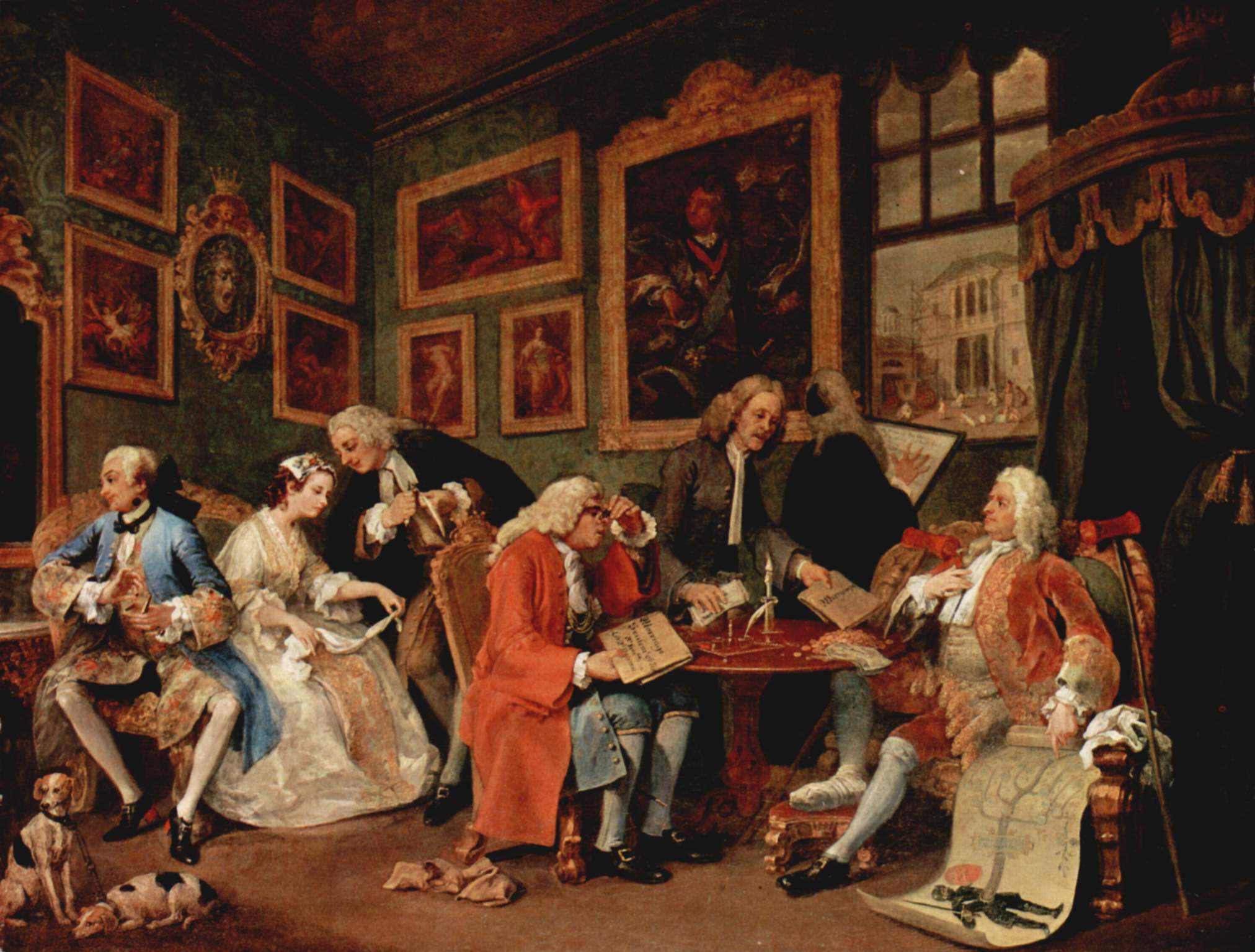
- Genealogy. In every age that I’ve investigated there is a degree of interest in one’s ancestry to be traced, especially amongst the nobility for whom it can prove land claims and precedents.  We could therefore perhaps study it across several centuries to ask what it can reveal about changing temporal identities.  For example, who was interested in it at any given time? 1066 and the next generation or two doubtless provided a crisis in England for both the locals and the invaders in terms of tracing one’s bloodline and preserving a connection with the past – are there similar moments later on? What effect did it have? Was it exclusively or primarily a noble (or gentle) pastime until the late mediaeval/early modern times? and is pastime the correct word? How and when did it spread, and to whom? What was it used for? proof? of what? to what ends? And what could prove it? The Earl of Warren’s sword with which his great-grandfather helped William invade England? A diagram on paper shaped like a tree whose roots are literally in the bowels of William the Conqueror?
- What about ‘progress’? Whose idea is that? And I mean that in a continuous way – not ‘where did it originate’, which is not a helpful question, but ‘in any given generation, was the idea of progress present, and was it positive or negative according to any given member or group in a given population’.  Of what did it consist, where were the emphases laid, and did it give any sense of a continuum in which the past, via the present, informed the future? or was the past being discarded?
- Is there any particular polemic associated, at any given point, with temporal identity? Is it continuous enough to trace any sort of history of it? To what extent do people use temporal concepts as insults (and do they in that context have an implicit identity-forming function by contrast)? I imagine, for example, this might come up a lot in theological/academic argument – accusing someone of being outmoded, or of abandoning auctoritas, places a value judgement on intellectual temporalities (or rather, lends them a temporal angle).  Or to look at it another way, the age of an individual – Chaucer’s Januarie/May repeats a well-established pattern of despising the body of the aged in comparison with the fresh body of youth, but of course there is more to the discourse of age than that, and the compliment might often be reversed (wisdom of age vs folly of youth, etc).  And how does this alter when someone has died, is past?
- And of course, most interesting from my point of view – how does a person’s perception of their individual relation to history, of their age’s place within a broader (divine?) scheme, of their duty to a future time (and/or present patron) affect their perception of their immediate task when they sit down to write a chronicle, write history? And what else gets in the way?

Saturday, December 26, 2009

Word made flesh #1

Now this is interesting.

The story is that of the Levite’s concubine from Judges (King James and Latin Vulgate): 
Judges 20.4: I came into Gabaa, of Benjamin, with my wife, and there I lodged: 5 And behold men of that city, in the night beset the house wherein I was, intending to kill me [volentes me occidere], and abused my wife with an incredible fury of lust [incredibili libidinis furore], so that at last she died. 6 And I took her and cut her in pieces, and sent the parts into all the borders of your possession: because there never was so heinous a crime, and so great an abomination committed in Israel. 7 You are all here, O children of Israel, determine what you ought to do.
According to the earlier narrative, the men who came to the house desired not to murder him but to rape him.  The host, reminiscent of Lot, offered his virgin daughter and his guest’s wife rather than the guest: “I will bring them out to you, and you may humble them, and satisfy your lust: only, I beseech you, commit not this crime against nature on the man” (“educam eas ad vos ut humilietis eas et vestram libidinem conpleatis tantum obsecro ne scelus hoc contra naturam operemini in virum”, Judges 19.24).  When she returned to the host’s house and fell dead on the threshold, her husband took her and cut her into twelve pieces, which he sent “into all the borders of Israel” (Judges 19.29.  The outrage summoned the Israelites, whom he addressed as above; and war was the result[1]. This is an image of the key scene from a 13th century Bible Moralisée (sadly blurry):

Österreicheische NationalBibliotecke Codex Vindobonensis 2554 fol. 65v, copied from Caviness 148.

The upper two images are of the corpse being brought home on an ass, and then being divided for distribution.  The lower two are of Jerome and Augustine helping Lady Philosophy  down from the ass of paganism, then giving the twelve books of the Patriarchs to the apostles.

But note the very deliberate visual parallels.  The corpse and Philosophy are helped down from the ass, Philosophy drooping in a way that imitates the inertia of the corpse.  As the corpse is dismembered into twelve parts for demonstrative distribution about the land, Philosophy is fragmented into twelve books to be distributed via the apostles.  Even the divided body parts are very flat and square, resembling images of the parts than the parts themselves, and lacking the curves that usually mark the feminine.

So the books are directly glossed as the dismembered body parts, which are themselves implicitly converted to relics and offered for idolising perusal, their femininity negated.  The female body of Philosophy, meanwhile, appears to have been constructed entirely of the books into which she is fragmented (and she has no more agency of her own, even when intact, than does the corpse). Word is made flesh – just as the words in the books are written on the dismembered flesh of the sheep who kindly donated the parchment.

This also raises the question of the female body as text.  It is not an autonomous text, however, but glossed, interpreted and directed by men – and the written word itself is essentially a male-dominated medium, so in converting to words the body that had temporarily escaped the Levite’s control, he reasserts his ownership and control. It becomes a commodity to be distributed according to the gift and will of its owner, with no more meaning than he chooses to assign it.  The woman’s experience of rape is not heard, only the man’s experience of theft.

Nevertheless – the woman has become Philosophy, and distributed to the inspiration of men’s intellect.  Grammatically feminine, of course, so she must be depicted by a woman, but it’s not a bad reincarnation for a gang-raped concubine, surely?


[1]   Which I’m sure was a great comfort to her.


Cited: Caviness, Madeline H. Visualizing Women in the Middle Ages: Sight, Spectacle, and Scopic Economy. Philadelphia: University of Pennsylvania Press, 2001.

Monday, November 2, 2009

Herte and mesure in BL Add. 37049 20r: in response to Caroline Walker Bynum

I was reading through an article by Caroline Walker Bynum a few days ago (see below for citation), and found a few points with regards to one manuscript image she discussed that I wanted to expand.

The article focuses on the violence and gore in many high to late mediaeval theological images, its possible implications and the differing emphases laid on images of the perforated or violated body. The manuscript is BL Additional 37049, a Carthusian miscellany which has plenty of other creatively gruesome images. I particularly like this take on the usual memento mori: you may look pretty and rich and noble even in death, but you are still worm-food, frail mortals! Specifically, Bynum examines 20r:

British Library Additional 37049 fol. 20r. Click for full size.

Bynum cites this image to support her argument that the wounds of Christ “evoked love”. Specifically, she notes that Christ “displays his own heart … [which] bears within it all five wounds of Christ’s body, and the accompanying dialogue… ends with the hope that we will soon come to joy” (Bynum 18). She also adds that the image “returns us to the theme of fragmentation”.

However, although she quotes the exchange between Christ and the kneeling man, she doesn’t, to my mind, adequately examine the literal centrality of the heart on the page and in the poetic exchange:

Querela diuina: O man unkynde / hafe i[n] mynde / my paynes smert[.] / Beholde + see / Þat is for þe / percyd my hert [...]

Responsio humana: O lord right dere / þi wordes I here / with herte ful sore[.] / Þ[ere]fore fro synne / I hope to wynne / And greue no more [...]

The heart is the centre and focus of the page; but also, it seems to me, of their exchange. The pain in Christ’s heart is matched by the pain in the heart of man, caused by the same sin. The mutual wound suggests a shared heart – as indeed the page represents, presenting the heart as the means of communication, the addressee of the gaze and words of each. The word “heart” is exchanged between them as is the wound, something shared and mutually comprehensible. In this way, I’d question (or at least complicate) Bynum’s interpretation of the heart as Christ’s: it seems to me the heart shared between God and man. On the other hand, by that very token, it becomes a form of mediation between the human and the divine, the common halfway point: Christ himself, as the word made flesh, the mediator for humanity before God.

Aptly, the heart literalises the concept of “word made flesh”: it appears to speak. The central wound seems almost a mouth, and the words around it may be seen as issuing from it. Interestingly, though the image of Christ is made to speak, and the heart appears to, the man remains silent, except for the voice in the poem. Silent before Christ, or only capable of speaking through the emissary of the heart – whether that be addressing God through Christ, or one’s own internal voice of prayer, rather than the potentially destructive external voice?

Central throughout Bynum’s article is the idea of metonymy, “undergirded by… the doctrine of concomitance (the idea that the whole Christ is present in every particle of the eucharist)” (22):

From folk assumptions that a measure or particle (fingernails or hair) can be the person to abstruse theological debates over the mode of presence of an immaterial God, medieval culture gloried in the paradox of parts that not so much represented as were the whole. (23)

Bynum then draws the connection between this and the mediaeval obsession with numerology, particularly the ability of the right numbers to convey truth: effectively, to stand in as a metonymical “part” that might stand for / be the whole. I’d draw the comparison, for example’s sake, with the pentangle on Gawain’s shield and its ability to simultaneously represent Gawain (or the idealised version of him) and the perfection of Christ or the Trinity[1]. She applies this to the motto inscribed around the “mouth” of the heart:

Þis is þe mesure of þe wounde þ[a]t our Ih[esu]s Christ sufferd for oure rede[m]ptiou[n].

Bynum points out the emphasis on the precise length of the wound contained in “mesure”, pointing out a long mediaeval tradition in which “length is a metonym for person” (20). The correct dimensions of the wound carry with them the nature of the person represented by it, and therefore, if it adheres to those dimensions, “an image of the wound was Christ” (20). However, I’d venture to add to her conclusion. It seems to me that the evidence she cites to the effect that precise numerical detailing of an object can reproduce it in its precise identity means that perhaps in this case the numerical “mesure” need not be the central concern. If “mesure” has become abstracted to the extent she describes, we might as well read “this is the nature”, or “this is exactly that wound Christ suffered and how it was given him”. In this way the heart that is the focus of the gaze of Christ, of the kneeling man and of the reader (given the layout of the page) becomes a demonstration and revelation of the words they exchange through it: the manner of the wound, the piercing sin that harms both (or all three) in the doing, a visual representation of the exact truth – the “mesure” – of the Passion.


----------

Arthur, Ross G. Medieval sign theory in Sir Gawain and the Green Knight, Toronto: Toronto UP, 1987.

Bynum, Caroline Walker. “Violent imagery and Late Medieval Piety”, German Historical Institute Bulletin 30 (2002), 3-36. Available online on the GHI Bulletin website.

Wednesday, September 9, 2009

And another thought...

I walked past a shelf today (containing books, as often happens in my life) on which a title caught my eye: "Discovering the Middle Ages". As I was heading somewhere at the time I didn't stop to find out whether this was, say, a record of archaeological research, or a book on the 19C England's revival of interest in the mediaeval ("Though the Philistines may jostle you will rank as an apostle in the high aesthetic band, If you walk down Piccadilly with a poppy or a lily in your mediaeval hand"[1]), but the title niggled at me. It sounded irritatingly as if, for one thing, there is only one MIDDLE AGES to discover, and that it can all be convincingly DISCOVERED if one goes about it the right way. And the combination of that with the title beside it (something about how people suddenly had the idea of being INDIVIDUAL in the 12th century) sounded even more irritatingly like it might even be a book on the people (all over Europe and elsewhere, across all those centuries) discovering their identity as MIDDLE AGERS.

Which I dismissed as an unfair judgement on a book I hadn't actually looked at very closely. But it got me thinking - I don't think I've ever come across anyone writing about the Middle Ages from the perspective of what I'm choosing to call temporal identity. National, obviously, religious, yes, social, financial, of course. But as being members of a body at a particular time in history, or as being defined as distinct from the actions of their forebears, or even descendants? Surely it's an idea that must hover around the edges of rather a lot of writing, particularly once we hit those highly visible events that cause rapid social change, oh, say, the Norman Conquest, or the Black Death. But each of those brings with it other identity factors that tend to steal the limelight: English/Norman, language, dispossession: economic crises that empower different social groups.

I suppose the instinctive reaction would be to say "oh, people in the Middle Ages just thought they were one big blob, they didn't differentiate from generation to generation". And even if one acknowledges a change in character from one century to the next, it's generally assumed, I think, that this is visible only in hindsight, that the lack of access to information about their own history made people only vaguely aware of it, a sort of mess of fable and tradition, there to inform and instruct but not necessarily something that they feel their times to be a unique part of.

But people do. We have, on the small scale, Gen X and Y, children of the nineties, sixties hairstyles and so forth. And if comic and satiric writing across the ages are anything to go by, the kernel of temporal identity - the griping against and between children these days/back in my day and the stodgy older generation - is as universal as fart jokes. Just ask Aristophanes. Once you have the basic them and us, and the sense of differentiation and movement that implies, the basic and possibly strongest form of time-based identity is there for the reaping. And repeating. And complaining about.

That doesn't necessarily lead to a larger perception of one's place in linear history, but there's no firm reason for it not to. Is this something we should be looking into? Or has it been, and I've just not noticed?

In fact, as it turned out, I hadn't looked at the book very closely at all. On passing it again later today I realised what it, and all its companion volumes, actually said on the spine: Dictionary of the Middle Ages.

Oh well!


[1] Gilbert and Sullivan, Patience, Bunthorne explaining to the audience how to best go about being "an aesthetic sham". For all those who, you know, didn't spend three years in their early teens being completely obsessed with them, which I realise is probably a substantial percentage of the population.